
AI Game Master - Dungeon RPG
Digital Dynasty Entertainment IncRole Playing
4.62.83K Reviews
- Version
- 3.4.1
- Installs
- 100.00K
- Age Rating
- Everyone 10+
Screenshots
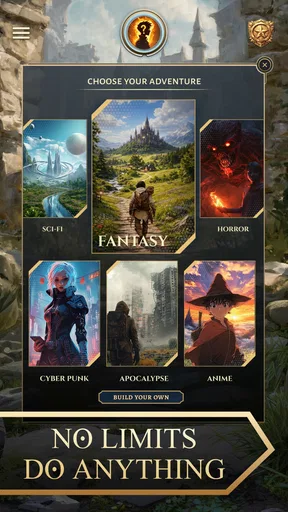
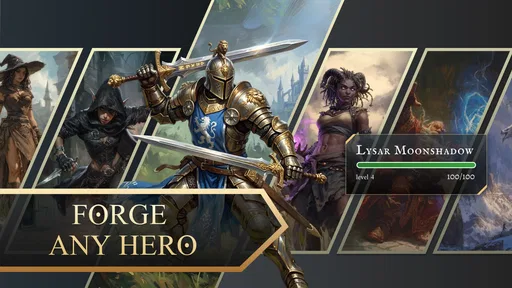
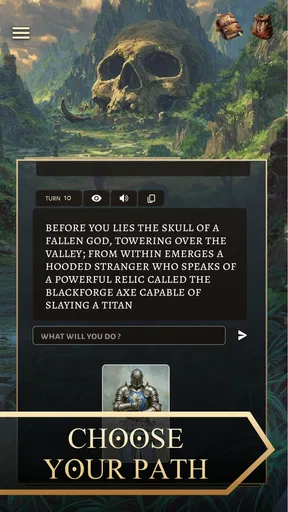
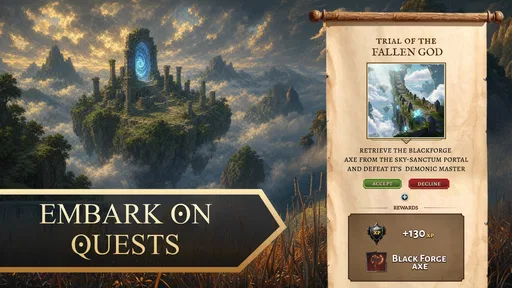
Our Review of AI Game Master - Dungeon RPG
 Analysis by Appyee
I went into AI Game Master - Dungeon RPG expecting a text adventure with a fantasy wrapper, but its appeal is more specific than that. This is a role-playing game built around an AI Game Master, so the main attraction is not a fixed map or a long list of animated battles. It is the feeling that a story can respond to what I type, change direction when I take an unexpected approach, and leave room for decisions that would be impossible in a tightly scripted campaign. That makes it unusually personal, although it also means the quality of a session depends on how clearly I communicate and how much patience I have for an improvised narrative.
The game comes from Digital Dynasty Entertainment Inc and is free to start, with optional purchases ranging from $0.99 to $209.99 per item. It sits in the role-playing category, carries an Everyone 10+ age rating, and has reached over 100 thousand installs. Its average rating is 4.6 from around 15 thousand ratings, which matches my general impression: the central idea is easy to enjoy, but the experience is not identical to a traditional role-playing game. I would recommend it most strongly to people who like fantasy fiction, tabletop-style choices, and experimenting with prompts rather than players looking for a polished action RPG.
My first impression: the story begins with a conversation
The first thing that defines this game is the way it treats text as the main interface for adventure. Instead of waiting for a predetermined menu to tell me exactly what the hero can do, I can describe an intention in ordinary language. That creates a different kind of control. I am not simply selecting “attack,” “talk,” or “run”; I am trying to explain what my character wants, how they approach a problem, and sometimes why they take a risk.
That freedom is exciting because it makes small decisions feel more personal. A locked door can become a test of persuasion, stealth, observation, or brute force, depending on the direction I give the Game Master. The trade-off is that the game does not remove the need to imagine. A conventional RPG shows me a world through graphics, animations, and carefully staged encounters. Here, much of the world exists in the words being exchanged, so I have to meet the game halfway.
I found the best early sessions came from treating each message as a useful piece of direction rather than a vague command. Saying that I wanted to inspect a ruined shrine for signs of recent visitors produced a more focused scene than simply writing “look around.” Describing a cautious personality or a specific goal also helped give the adventure a stronger identity. This is one of the less obvious strengths of the format: the player’s writing style becomes part of the game’s presentation.
It is also why this will not suit everyone. If I want immediate visual feedback, fast combat, or a character who is always moving across a detailed environment, this experience can feel too quiet. The game asks me to enjoy reading, imagining, and deciding. It is closer to participating in an unfolding fantasy story than to controlling a conventional dungeon crawler.
A practical way to begin a new adventure
My advice is to establish three things early: who the character is, what they want, and what kind of tone I want from the adventure. A wandering healer seeking a lost sibling creates a different rhythm from a reckless treasure hunter looking for danger. The more useful context I provide, the easier it is for the story to develop a recognizable direction instead of becoming a sequence of disconnected surprises.
I also avoid trying to force every possible action into one message. Giving the Game Master one clear intention makes the result easier to follow and gives me a natural chance to react. That back-and-forth is where the game feels strongest. It resembles a tabletop session in which the player proposes an action, the Game Master describes the consequence, and the next decision grows from what just happened.
For a short everyday session, I can play during a commute, while waiting for an appointment, or in bed when I want something more active than reading but less demanding than a full game. A useful routine is to finish each session after a clear story beat: reaching a settlement, discovering a clue, or surviving a difficult choice. That makes it easier to return later without losing the thread.
The world’s language matters more than its visual detail
The setting works through fantasy language rather than a large visual presentation. Ruins, quests, danger, characters, and discoveries gain their shape from the descriptions I receive and the choices I make. I noticed that the mood becomes more convincing when I stay consistent with the world. A solemn response to a haunted location can preserve tension, while treating every scene as a joke can quickly flatten it.
This makes the player partly responsible for the art direction. I am not choosing a color palette or camera angle, but I am influencing whether the adventure feels grim, adventurous, mysterious, or playful. A short instruction such as “keep the old forest unsettling, with clues that are easy to miss” can guide the atmosphere more effectively than a generic request to continue the story. That is a genuine creative advantage, especially for players who enjoy shaping fiction.
The drawback is inconsistency. Because the story is generated through interaction, the world may not always feel as tightly authored as a campaign written from beginning to end. Details can become less memorable if I do not reinforce them. I found it helpful to keep a small mental or written record of important names, promises, objects, and unresolved threats. Returning to those details gives the adventure continuity and prevents every new scene from feeling like a reset.
This approach also changes how I judge “good writing.” In a traditional RPG, I expect the game to carry the entire burden of characterization, pacing, and lore. Here, I am collaborating with the system. When I offer a strong premise, specific emotional stakes, or a clear reaction to an event, the resulting story can feel surprisingly tailored. When I give minimal input, the experience can become more generic. The game rewards participation in a way that is easy to miss from its short store description.
How I keep the fantasy setting coherent
I get better results by introducing recurring elements instead of constantly changing direction. A single rival, village, artifact, or moral problem can give the adventure a sense of place. I also prefer asking for consequences rather than simply requesting bigger events. “What does the guard suspect after I leave?” is more useful to me than repeatedly asking for a more dramatic battle, because it allows the world to develop beyond spectacle.
Another useful habit is to state boundaries for the tone. If I want a serious quest, I say so. If I want lighter banter, I make that clear before the mood drifts. This is not a substitute for authored storytelling, but it gives me more control over the kind of fantasy experience I am building. Players who enjoy writing prompts will appreciate that layer; players who want the game to make every creative decision may find it demanding.
The world is therefore strongest as a flexible stage for personal role-play. It is less convincing when I expect the same kind of visual specificity or lore density found in a large, handcrafted fantasy RPG. I would choose this game for improvisation and replayable story possibilities, not for collecting detailed environments or admiring elaborate character animation.
Sound, silence, and the rhythm of a text adventure
The mood here is created primarily through language and pacing. Without relying on constant visual action, the game can make a moment feel tense by delaying an answer, describing a suspicious movement, or placing a difficult decision immediately after a discovery. I found that the rhythm works best when I allow scenes to breathe instead of rushing from one command to the next.
That slower rhythm is a strength for thoughtful players. I can pause to consider whether my character should trust someone, examine a clue, or accept a dangerous bargain. The lack of rapid input makes the game suitable for relaxed play, and it gives the narrative room to focus on choices rather than reflexes. It also means that a session can feel repetitive if every exchange has the same shape: description, command, description, command.
To avoid that, I vary my responses. Sometimes I describe an action, sometimes I ask a character a direct question, and sometimes I state an emotion or a suspicion. This creates more natural dramatic movement. I may decide that my character hides fear instead of simply saying they enter a room, or I may ask what an NPC refuses to discuss. These small changes help the text feel less like a checklist and more like a conversation.
I would not choose this game when I am in the mood for a strong musical score or cinematic sound design. Its atmosphere comes from imagination and written delivery, so players who depend on audio cues for tension may find the presentation restrained. On the other hand, that restraint makes it easy to play in quiet surroundings and lets me supply my own mental soundtrack. The result is intimate rather than spectacular.
Why pacing can make or break a session
The most satisfying sessions usually contain a mixture of travel, conversation, investigation, and risk. If I push only for combat or constant revelations, the adventure can lose contrast. A quiet exchange before a dangerous decision makes the danger more meaningful. Likewise, investigating an ordinary object can be more memorable when it connects to a later mystery.
I also learned not to judge a session by how many events it contains. A single choice with a believable consequence can be more rewarding than a long chain of disconnected encounters. This is an important trade-off compared with action-focused RPGs: the reward is often narrative momentum rather than visual progress, loot, or a new ability appearing on screen.
For players who prefer short bursts, I suggest setting a simple objective before starting: find information about a missing person, negotiate safe passage, or investigate one location. That keeps the open-ended format manageable. For longer sessions, it helps to end with a question that naturally invites a return, such as who is following the party or why a seemingly harmless object matters.
Where the mechanics fit—and where they feel different
As a role-playing game, this title is built around decisions, character perspective, and narrative consequences rather than the familiar loop of grinding enemies for equipment. That makes it a good match for tabletop-inspired players who care about role-play. I can approach a problem according to the character I am imagining, not just according to the most efficient option presented by a menu.
The freedom is valuable, but it comes with less mechanical certainty than a conventional RPG. In a rules-heavy game, I can inspect statistics, compare abilities, and understand why an attack succeeded or failed. Here, the story is the main feedback system. If I enjoy interpreting consequences, that feels liberating. If I want transparent numbers and carefully balanced encounters, the experience may seem loose.
This is also where expectations about AI matter. The Game Master can respond to unusual ideas, but I should not assume that every clever plan will produce a perfectly consistent result. I get the best experience when I treat unexpected turns as part of improvisation and gently steer the story back when it wanders. Clear corrections such as “keep the previous clue relevant” or “my character did not agree to that” are more productive than abandoning the session immediately.
That interaction is one of the game’s most interesting advanced habits. I am not only playing the character; I am occasionally helping maintain the campaign’s direction. In a traditional RPG, the designer handles continuity behind the scenes. Here, I can improve continuity by reminding the Game Master of the facts that matter most. This extra responsibility is a strength for creative players and a weakness for anyone who wants a completely hands-off experience.
Free entry and the question of spending
The game is free to play, which makes it easy to test the central idea before deciding whether it belongs in my regular rotation. Optional purchases are available, with individual items priced from $0.99 up to $209.99. I would approach those purchases carefully and decide first whether I enjoy the conversational format itself. No purchase can make a player who dislikes text-led role-playing suddenly prefer it to a visual adventure.
My practical recommendation is to use the free starting experience as a trial of the writing loop. Pay attention to whether you enjoy composing actions, reading responses, and guiding the tone. If that cycle already feels engaging, optional spending may be easier to evaluate on its own terms. If the cycle feels slow or too open-ended, it is better to choose a more traditional RPG with clearer progression and a more visible action system.
The game runs on devices using Android 7.0 or later, and the current version is 3.4.1. Those details make it approachable for people using older compatible Android hardware, although the quality of a text adventure still depends heavily on whether the player enjoys reading on a phone. I would also suggest checking the purchase screen carefully before confirming anything, especially for younger players, since the available item range is broad even though the content rating is Everyone 10+.
Who will enjoy this more than a usual RPG?
I see the strongest audience as people who like tabletop role-playing but do not always have a group available. It can fill a different space from a multiplayer campaign: I can play alone, set my own pace, and experiment with character ideas without coordinating schedules. It is also a good fit for readers who want to influence a fantasy narrative instead of passively consuming one.
Writers may find an unexpected use for it as a low-pressure idea generator. I can test how a character reacts to a moral dilemma, explore the consequences of a setting premise, or discover a side character through conversation. I would not treat every result as finished fiction, but the interactive format can expose possibilities that I would not have considered while outlining a story alone.
It is less suitable for players who want competitive play, precise tactical combat, collectible progression, or a highly authored cinematic campaign. A traditional dungeon RPG is the better choice when I want to master a fixed ruleset, optimize a build, or watch the character grow through clearly measured systems. A visual novel may be better when I want carefully controlled dialogue and presentation. This game occupies the space between those options, with more freedom than a fixed script but less mechanical structure than a rules-focused RPG.
Parents should also remember that the age rating is Everyone 10+, while the game’s open-ended role-playing format means the tone of a session can depend on how the player interacts with it. I would guide younger players toward age-appropriate prompts and use the purchase controls on the device. The rating makes it broadly accessible, but responsible supervision is still sensible for any interactive storytelling tool.
My atmosphere verdict after spending time with it
AI Game Master - Dungeon RPG succeeds because it turns the player’s imagination into part of the presentation. Its fantasy mood does not come from a large visual spectacle; it comes from the language of the setting, the pauses between decisions, and the way a simple message can redirect an adventure. When I give the story clear intent, the experience feels personal and flexible. When I play passively, it loses much of its identity.
The mechanics fit that goal, but they ask for a different kind of patience. I have to accept that the game is not a replacement for a fully authored campaign or a fast action RPG. It is a conversational role-playing space where I help maintain tone, continuity, and momentum. That can feel wonderfully open, but it can also expose the rough edges of improvisation.
For me, the best use is a focused solo fantasy session: choose a character with a clear motivation, establish a mood, pursue one immediate objective, and build on the consequences rather than constantly demanding bigger events. That workflow gives the story shape while preserving the freedom that makes the game distinctive.
Digital Dynasty Entertainment Inc has made something most appealing to players who want a portable Game Master rather than another conventional dungeon adventure. I would recommend trying it if you enjoy reading, role-playing, and writing your own actions. I would skip it in favor of a visual or rules-heavy alternative if I needed polished combat, fixed progression, or a soundtrack-led atmosphere. For the right player, though, its quiet presentation is not a weakness; it is the space where imagination takes over.
Verdict
Strengths of AI Game Master - Dungeon RPG
- Creates flexible adventures from simple prompts
- Supports solo play without needing a regular gaming group
- Encourages creative character concepts and unusual story choices
- Can adapt encounters to different player decisions
- Useful for quick fantasy sessions when time is limited
Limitations of AI Game Master - Dungeon RPG
- AI-generated plots may occasionally feel repetitive or inconsistent
- Long conversations can make important story details harder to track
- Some features may require an internet connection
- The game may not suit players seeking detailed tactical combat
- Generated content can vary in quality between different adventures
Similar Picks in This Category
View All
Hair Dye
CrazyLabs LTD4.4

Monster High™ Beauty Salon
CrazyLabs LTD4.5

Bus Simulator - Bus Games 3D
Jima Apps4.4

Flight Pilot: 3D Simulator
Wildlife Studios4.1


Super Stylist Fashion Makeover
CrazyLabs LTD4.4
Frequently Asked Questions
What is AI Game Master - Dungeon RPG?
AI Game Master - Dungeon RPG is an interactive role-playing game that uses artificial intelligence to act as a virtual dungeon master. Instead of following a completely fixed storyline, you describe actions, make choices, explore locations, and respond to events while the AI generates much of the adventure. It is designed for players who enjoy fantasy storytelling, improvisation, character progression, and tabletop-inspired gameplay on a mobile device.
Do I need previous experience with tabletop RPGs to play?
No previous experience with Dungeons & Dragons or other tabletop role-playing games is required. The game generally explains its basic systems through the adventure, and you can begin by choosing a character or entering simple actions in natural language. Some familiarity with role-playing concepts may help, especially when managing equipment, abilities, or combat decisions, but beginners can enjoy it without learning complicated rules first.
Does AI Game Master - Dungeon RPG require an internet connection?
An internet connection may be necessary for important parts of the experience because the game relies on AI services to interpret actions and generate story responses. Offline availability can depend on the version, device, and specific feature being used, so players should not assume that the complete adventure works without connectivity. A stable connection is recommended for smoother replies and fewer interruptions during gameplay.
Is the game free to download, and does it include in-app purchases?
The app may be available to download at no initial cost, but players should check the current Google Play Store or Apple App Store listing for the exact pricing model. AI-powered games commonly offer optional subscriptions, credits, premium adventures, or other in-app purchases to support ongoing generation costs. Review the purchase details carefully before starting, particularly if several people use the same device or account.
Can the AI-generated story make mistakes or produce unexpected content?
Yes. Because the adventure is generated dynamically, the AI may occasionally misunderstand an action, repeat information, create an inconsistent detail, or produce an outcome that does not match your intention. The quality of the experience can also vary depending on how clearly you describe what your character wants to do. Treat the game as an improvisational storytelling tool rather than a perfectly scripted campaign, and use concise instructions when correcting the narrative.
Play our best games!


